
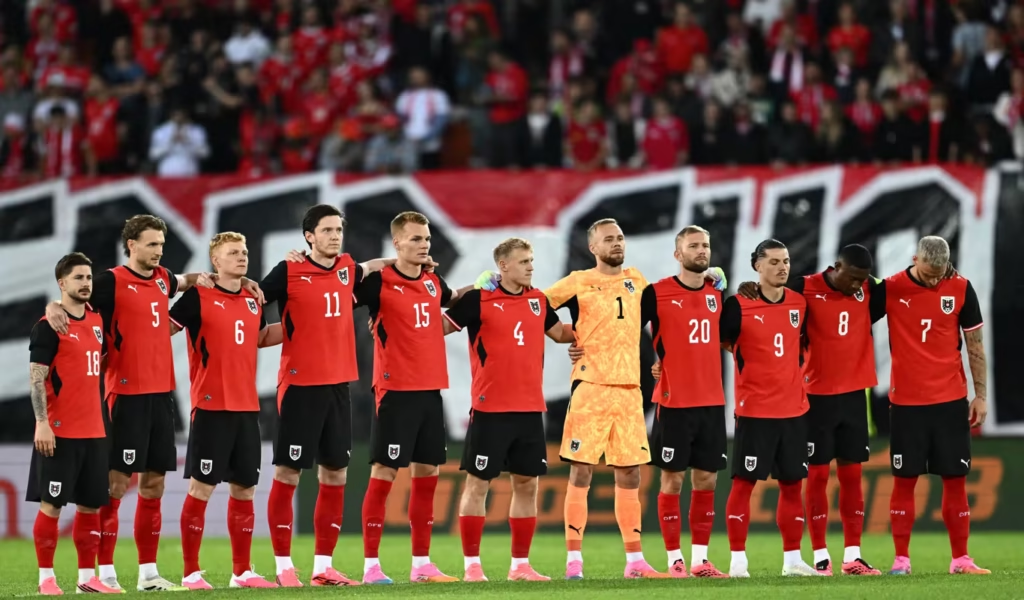
Twenty-eight years is a long time to wait. The last time Austria played at a World Cup, Ralf Rangnick was managing a second-division German club, David Alaba was barely out of nursery school, and Nicolas Seiwald literally hadn’t been born yet. That’s how long Das Nationalteam have been away from football’s biggest stage, and the emotion around the Austrian camp right now is something that doesn’t need to be manufactured for the cameras.
What makes this return feel genuinely different from just showing up and being grateful to be there is the quality Rangnick has built over the past four years. Austria won six of their eight qualifying games and finished with a goal difference of plus 18. That’s not a team scraping through on a technicality. That’s a team that earned their place comfortably, and they know it.
Xaver Schlager summed it up better than any press release could. “You work your whole life to make it here, and now we’re here,” he said before the opener against Jordan. There was also a rare honesty about the nerves involved, describing it as a positive kind of pressure rather than fear, more like the anticipation of doing something you’d usually only dream about. That’s a mature way to handle a moment that could easily overwhelm a squad with limited World Cup experience.
Striker Michael Gregoritsch hasn’t lost sight of the bigger ambition though. Austria aren’t here just to participate. They’re in Group J alongside defending champions Argentina and African heavyweights Algeria, and Gregoritsch has been clear that the team expects a lot of themselves. He’s also under no illusions about Jordan being any kind of gimme. He specifically called them an extremely compact side who make life difficult for any opponent, and in this tournament format three early points really can define how the rest of the group plays out.
What gives the Austrians genuine cause for optimism beyond just squad quality is the stability that comes with Rangnick renewing his contract through to 2028. Getting that announcement done before the tournament started was smart management, and both Alaba and Gregoritsch spoke about the psychological boost it gave the group heading into North America. When a squad knows the same coach will be there after the tournament regardless of the result, it removes a layer of anxiety that can sometimes affect tournament performance when futures feel uncertain.
Austria’s return to the World Cup after nearly three decades is the kind of story that’s worth following properly, not just catching highlights of later. If you want to watch every minute of their Group J campaign live as it happens, a quality IPTV subscription gives you access to broadcaster feeds covering all 104 matches of this expanded tournament from wherever you’re watching.
Rangnick himself put it perfectly when he admitted he’d like to enjoy this moment inwardly even if the touchline doesn’t always allow for visible emotion, while challenging his players to give everyone something to actually smile about after the final whistle. That’s the right balance between savoring the occasion and staying competitive, and if Austria carry that mentality into their matches, this could be the beginning of a very interesting tournament run for a nation that’s been waiting a generation for this chance.