
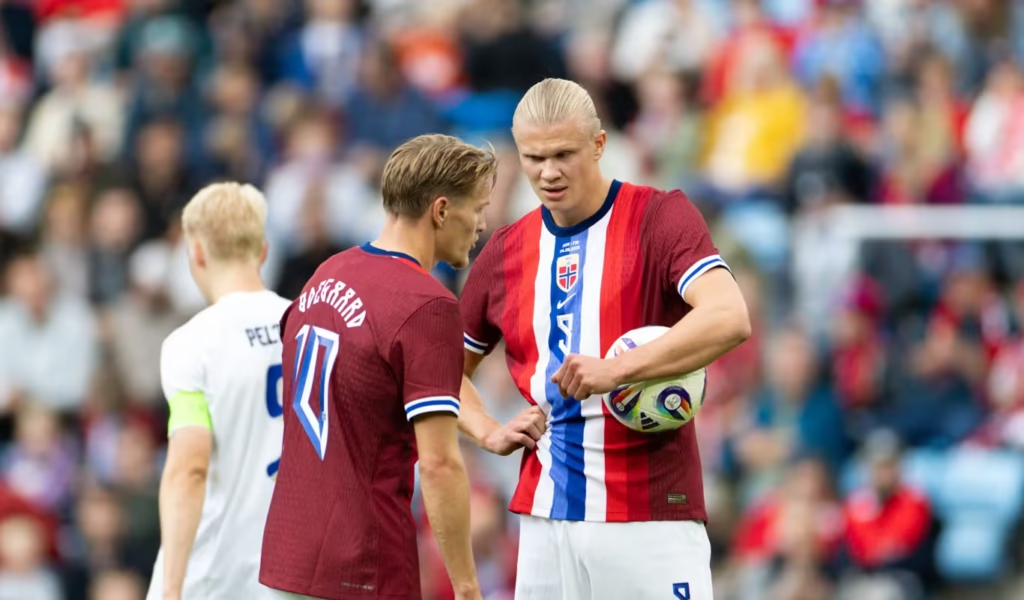
The last time Norway played at a World Cup, the coach now standing in their technical area was a player himself. Stale Solbakken was part of the 1998 Norway squad that pushed Italy all the way in the round of sixteen in Marseille, losing 1-0 in a match that turned out to be the country’s last World Cup appearance for nearly three decades. Now he’s the one making the decisions, and he’s doing so with arguably the most talented Norwegian squad in the country’s history.
Norway’s return to the World Cup is one of the storylines worth following throughout this whole tournament. They have the players to make a real impression on the knockout stages if they get out of the group cleanly. If you want to follow every match of Norway’s campaign live without missing a Haaland goal or an Odegaard moment of brilliance, a quality IPTV subscription covering global broadcaster feeds means you’re watching it happen rather than reading about it afterward.Win all eight qualifying matches. That’s what Norway did to get here. Not scrape through, not rely on other results. Win every single group game with a perfect record. The squad Solbakken has assembled clearly knows how to handle competitive pressure before a ball has been kicked at this tournament, and the quality throughout the team goes well beyond the two names that everyone mentions first.
But let’s acknowledge those two names anyway, because the worldwide attention on Erling Haaland and Martin Odegaard is justified. Solbakken was direct about Haaland when pressed before the Iraq opener in Boston: he called him the world’s best goalscorer and said that if Norway can give him chances, he has a tendency to score. That’s putting it mildly. The question for Norway’s opponents at this tournament is not whether Haaland will score if given space. It’s whether they can deny him that space for 90 minutes.
Patrick Berg’s story adds a different dimension to what Norway are building right now. He described this as without doubt the best year of his career, having helped Bodo/Glimt reach the Champions League round of sixteen while simultaneously contributing to Norway’s flawless World Cup qualification. He also said something that deserves to be taken seriously: that this generation, right now, is the best Norway has ever had. He acknowledged the quality of the 1990s sides who did well at major tournaments, but pointed to the sheer star power available today and what that means for ambitions at this competition.
Sander Berge brought a more personal touch to the conversation, talking about what it means to represent Norway at a World Cup with his entire family watching from the stands. Both his parents were international basketball players, his brother has played college basketball in the United States, and having them all present in North America for this tournament is something he described with genuine pride.
Solbakken was honest about the group. Group I with Senegal and France waiting after Iraq is not a gentle opening run. He said as much without any attempt to downplay it. But he also said that starting with three points against Iraq would put Norway on their way, and with the firepower they have at the top end of the pitch, that’s an entirely realistic target.
Twenty-eight years is a long time to wait for this. Norway are back, and they haven’t arrived in North America to make up the numbers.